Source cerebral palsy pediatric wheelchair for hospitals, clinics, and home care
Find 30 verified options for the cerebral palsy pediatric wheelchair, comparing features like adjustable seat angles, leg rest types, and material compositions from suppliers in China and Hebei.
Key considerations
Products List






Comprehensive Sourcing Guide
Strategic Sourcing Guide for Cerebral Palsy Pediatric Wheelchairs
Procuring specialized mobility equipment for pediatric patients with cerebral palsy requires a rigorous, evidence-based approach that balances clinical needs with commercial viability. The market for these devices is characterized by high customization demands, diverse material compositions, and strict regulatory landscapes. Buyers must navigate a complex array of specifications, from adjustable seating angles to specific leg rest configurations, to ensure the selected product supports the unique developmental and physical requirements of the child. This guide outlines the critical factors for sourcing cerebral palsy pediatric wheelchairs, grounded in verified product attributes and industry standards.
Technical Specifications and Functional Requirements
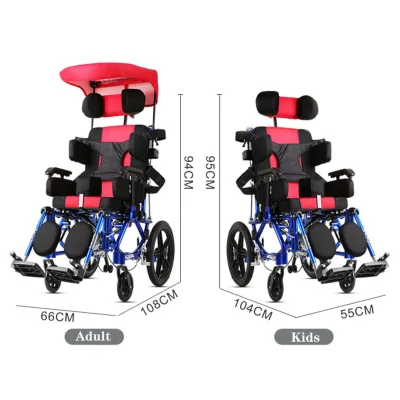
The core of any successful procurement for cerebral palsy wheelchairs lies in matching technical specifications to the patient's specific motor control levels and growth trajectory. Unlike standard wheelchairs, these units often require dynamic adjustments to accommodate spasticity, contractures, and postural instability. The observed product data indicates a wide spectrum of functional attributes available in the market. A primary consideration is the seating system. Products are frequently listed with "Seat Angle: Adjustable" and "Seat Width" options ranging from 12" to 18". This variability is critical, as pediatric patients grow rapidly, and the ability to adjust the seat width ensures the wheelchair remains functional for a longer period, reducing the frequency of replacement.
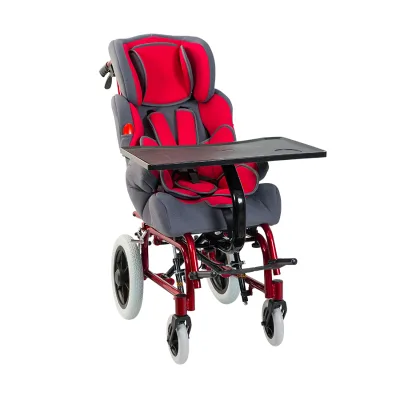
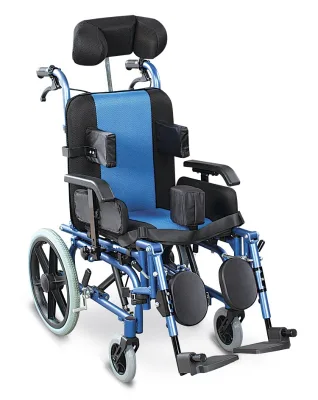
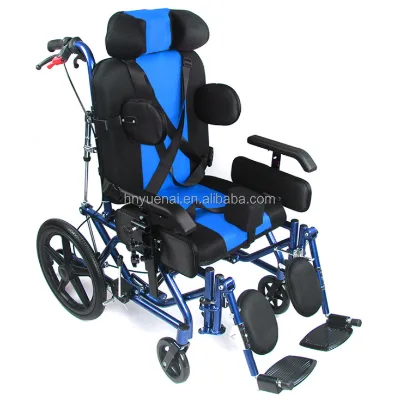
Postural support is another non-negotiable technical requirement. The data highlights specific leg rest configurations, including "Across Both Sides" and "Both Sides Separate" options. For children with cerebral palsy, the "Both Sides Separate" configuration often provides superior control over hip abduction and knee extension, allowing therapists to customize the leg position to manage tone. Furthermore, the availability of "Elevating and Height Adjustable" legrests is a significant feature. This capability allows for the management of edema and the facilitation of transfers, which are common challenges in pediatric care.
The structural composition of the wheelchair also dictates its performance. The market offers units constructed from both "Steel" and "Aluminium Alloy." Steel frames generally offer high durability and lower costs, suitable for heavy-duty use or environments where weight is less of a concern. Conversely, Aluminium Alloy frames provide a lighter weight profile, which is advantageous for caregivers who must frequently lift or transport the chair. The choice between these materials should be driven by the specific mobility needs of the child and the physical capabilities of the primary caregiver. Additionally, the "Armrest: Detachable" feature is a standard observation in many listings, facilitating easier access for transfers and positioning.
Compliance and Certification Verification
Navigating the regulatory landscape is essential when sourcing medical devices for children. The provided product data reveals a mix of certifications, including "CE," "RoHS," "UL," and "ISO." While these are listed as attributes, buyers must treat them as observations requiring verification rather than automatic guarantees of compliance for every unit. The presence of "CE" and "RoHS" suggests adherence to European safety and environmental standards, while "UL" indicates compliance with specific safety standards often required in North American markets.
Crucially, the data references "Medical Device Regulatory Type," which varies by region and product classification. Buyers must verify that the specific model they intend to purchase holds the correct regulatory clearance for their target market. The "ISO" certification is frequently mentioned, but the specific standard (e.g., ISO 13485 for quality management systems) should be confirmed. Relying on general "ISO" mentions without specifying the standard can lead to procurement of non-compliant goods. Furthermore, the "Type Tilted: Non-Tilted" attribute in the regulatory data indicates that some units are classified as non-tilting, while others are "Tilted." For cerebral palsy patients, a "Tilted" function is often clinically preferred to manage pressure ulcers and provide postural relief. Buyers must explicitly confirm the tilt mechanism's functionality and safety, ensuring it meets the specific medical needs of the user rather than assuming a standard configuration.
Cost Drivers and Pricing Dynamics
The pricing for cerebral palsy pediatric wheelchairs is influenced by a complex matrix of factors, including material costs, customization levels, and regulatory compliance. The observed price range in the market spans from $0.01 to $380.43. This wide disparity indicates that the lowest price points likely correspond to basic, non-customized units or perhaps accessories, while the higher end reflects fully customized, medically complex devices with advanced features like tilt-in-space mechanisms and specialized seating systems.
Material composition is a primary cost driver. Aluminium Alloy models typically command a premium over Steel models due to the higher cost of raw materials and the manufacturing processes required to maintain structural integrity while reducing weight. Customization is another significant factor. The data confirms that "Customization: Available" and "Logo: Customization" are common attributes. However, the distinction between "Customized" and "Non-Customized" suggests that buyers may encounter base models that require additional modification or fully bespoke units. The latter will inherently carry a higher price tag due to the engineering and labor involved.
Packaging and logistics also impact the final cost. The observed packing standards vary from "Carton" to "Color Box" and "Yellow Corrugated Carton," with specific dimensions like "804168cm" noted for certain models. The "Gross Weight" of 20kg versus "Net Weight" of 18kg highlights the importance of accurate shipping calculations. Buyers should consider the "40hq: 295PC" metric, which indicates the container capacity for bulk orders. This metric is vital for optimizing shipping costs; a higher container fill rate significantly reduces the per-unit logistics cost. Understanding these variables allows buyers to forecast total landed costs accurately and avoid unexpected expenses that can erode profit margins or inflate the final price for the end-user.
Typical Applications and Clinical Use Cases
Cerebral palsy pediatric wheelchairs are designed for a variety of clinical applications, ranging from daily mobility to therapeutic positioning. The "Type: Ordinary Wheelchair" and "Type: Aid Standing Wheelchair" classifications in the data point to distinct use cases. Ordinary wheelchairs are suitable for general mobility in home and school environments, while Aid Standing Wheelchairs are specialized devices that allow the child to stand, which is crucial for bone density development and preventing contractures.
The "Seat Angle: Adjustable" and "Leg Rest: Elevating" features are particularly relevant for therapeutic applications. Children with cerebral palsy often suffer from spasticity, which can be managed by adjusting the seat angle to reduce muscle tone. The ability to elevate the legrests helps in managing venous return and reducing swelling. The "Tilted" attribute is also a key differentiator for clinical use; a tilt function allows the caregiver to shift the child's center of gravity, providing relief from pressure points and facilitating repositioning without the need for manual lifting.
Furthermore, the "Color: Silver" and "Color: Blue, Red, etc." options suggest that aesthetic customization is available. While not a clinical requirement, color choices can play a role in the psychological well-being of the child and the acceptance of the device by the family. The "Condition: New" attribute ensures that buyers are receiving pristine equipment, which is essential for hygiene and safety in pediatric care. Understanding these applications helps buyers align the product specifications with the specific therapeutic goals of the patient, ensuring the wheelchair serves as a tool for development rather than just a means of transport.
Supplier Evaluation and Origin Analysis
Evaluating suppliers requires a careful analysis of their geographic origins and production capabilities. The data indicates that products originate from "Hebei," "Jiangsu," and "China Guangdong." These regions are known for their manufacturing clusters, but they may have different specializations. Hebei and Jiangsu are often associated with heavy manufacturing and steel production, which might correlate with the "Steel" material observations. Guangdong, on the other hand, is a hub for electronics and lighter manufacturing, potentially aligning with "Aluminium Alloy" and more complex electronic or mechanical features.
When evaluating suppliers, buyers should verify the "Manufacturing Lead Time," which is observed as "2 Weeks" for certain models. This lead time is a critical factor in supply chain planning, especially for urgent medical needs. However, buyers must be cautious, as lead times can vary based on customization requirements. The "MOQ" (Minimum Order Quantity) range of 1 to 250 units suggests flexibility in ordering, allowing buyers to start with small test orders or scale up to bulk purchases.
The "Standard: 1 pc/ctn" and "Universal" packing standards indicate that some suppliers offer standardized packaging, which simplifies logistics. However, the variation in packing, such as "Color Box" versus "Standard Packing," suggests that buyers should confirm packaging details to ensure the product arrives in optimal condition. Additionally, the "Certification" attributes should be cross-referenced with the supplier's quality management systems. A supplier claiming "ISO" certification should be able to provide documentation proving their adherence to specific quality standards, rather than relying on generic claims.
Quality Control and Long-Term Procurement Considerations
Ensuring long-term quality and reliability is paramount when sourcing medical devices. The "Condition: New" attribute is a baseline expectation, but buyers must implement robust quality control measures to verify this claim. This includes inspecting the "Tires: Solid or Pneumatic" for durability and the "Rear Wheel: 16"" for proper alignment and bearing quality. Solid tires offer low maintenance, while pneumatic tires provide better shock absorption, a choice that should be validated against the intended terrain.
Long-term procurement considerations also involve the availability of spare parts and the durability of the frame. The "Net Weight: 18kg" and "Gross Weight: 20kg" data points suggest a specific weight class that impacts the longevity of the wheels and bearings. Buyers should inquire about the warranty terms and the availability of replacement parts, such as armrests and legrests, which are subject to wear and tear. The "Customization: Available" attribute implies that the supplier should be capable of providing custom parts or modifications if the child's needs change over time.
Finally, the "prod_model" variations, such as "SHT-451," "SHT-450," "BME4620," and "KH001," indicate a diverse product line. Buyers should ensure that the specific model selected has a proven track record of reliability. The "Standard: 18kg" attribute for the BME4620 model suggests a specific weight standard that should be verified against the actual product specifications. By focusing on these detailed attributes and maintaining a rigorous quality control process, buyers can secure a supply chain that delivers safe, effective, and durable mobility solutions for children with cerebral palsy.
FAQs
What certifications are available for cerebral palsy pediatric wheelchairs?
Products commonly list CE, RoHS, UL, and ISO certifications. Buyers must verify specific regulatory types like Type Tilted or Non-Tilted to ensure compliance with local medical device standards before purchase.
Which materials are used for cerebral palsy pediatric wheelchair frames?
Frames are typically constructed from either Steel or Aluminium Alloy. Steel offers durability for heavy use, while Aluminium Alloy provides a lighter profile suitable for caregivers who need to transport the chair frequently.
Can the seat width be adjusted for growing children?
Yes, seat width is adjustable with options ranging from 12 inches to 18 inches. This feature allows the wheelchair to accommodate rapid growth, ensuring the device remains functional for a longer period without replacement.
What leg rest configurations are available for cerebral palsy patients?
Leg rests come in Across Both Sides or Both Sides Separate configurations. Some models also feature elevating and height adjustable legrests to manage edema and facilitate proper positioning for children with spasticity.
How long is the manufacturing lead time for these wheelchairs?
The standard manufacturing lead time is observed to be 2 weeks. This duration may vary depending on the level of customization required, such as specific logos or unique structural modifications requested by the buyer.
What is the typical price range for cerebral palsy pediatric wheelchairs?
Prices in the market range from 0.01 to 380.43 USD. The lower end often reflects basic units, while higher prices correspond to customized models with advanced features like tilt-in-space mechanisms and specialized seating systems.
Where are these wheelchairs typically manufactured?
Products originate from regions including Hebei, Jiangsu, and China Guangdong. These locations represent major manufacturing clusters, with Hebei and Jiangsu often associated with steel production and Guangdong with lighter alloy manufacturing.